
Episode 79: When Parenting Feels Heavy
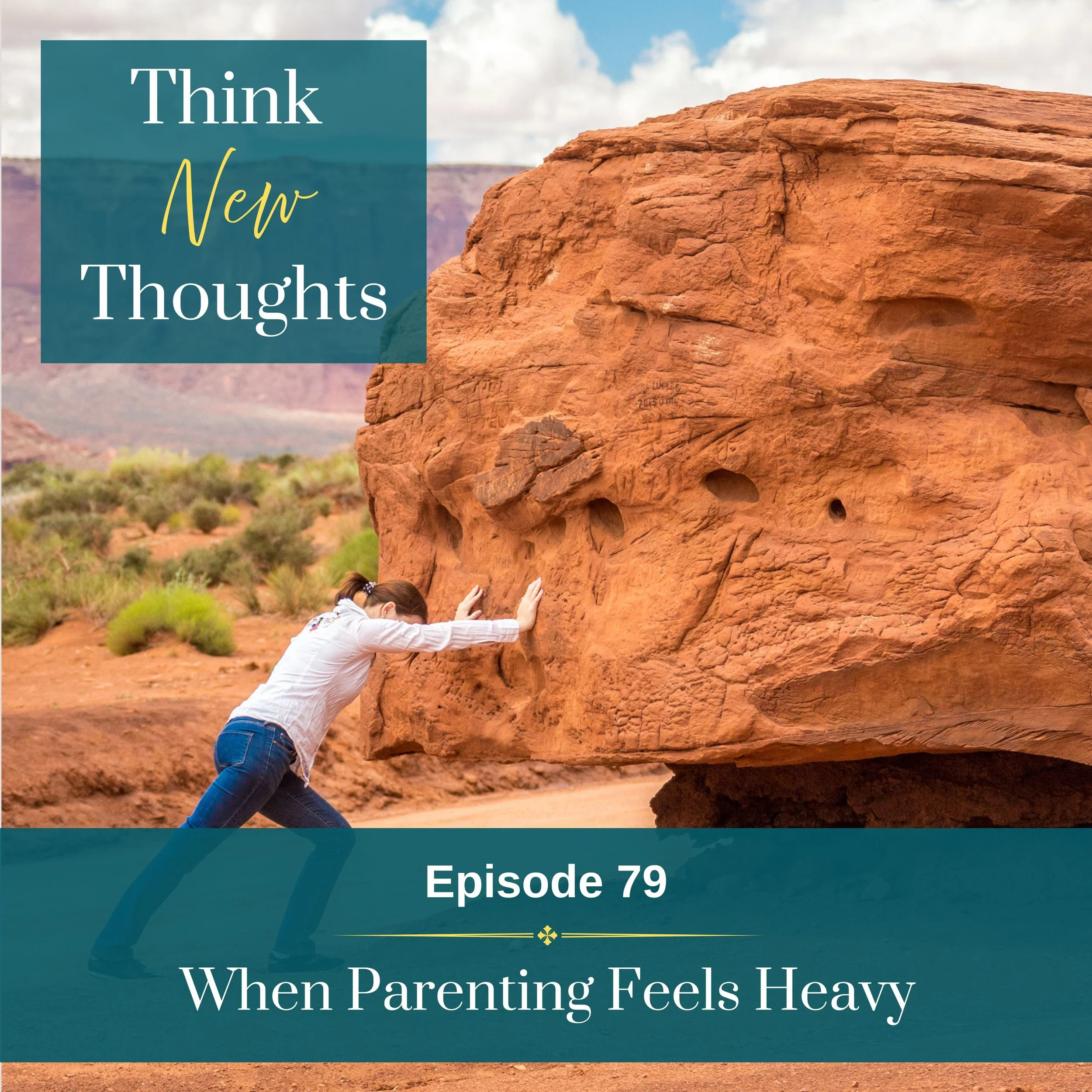
If you are a parent, there will be days where you will feel worn out, sleep deprived, and spent. That's just part of the deal. But there is a certain type of exhaustion--one that is created by the way we THINK about our kids--that is actually optional, that doesn't have to keep beating you down. Tune in to this week's episode to find immediate relief from the resistance that might be quietly draining the joy from your parenting.
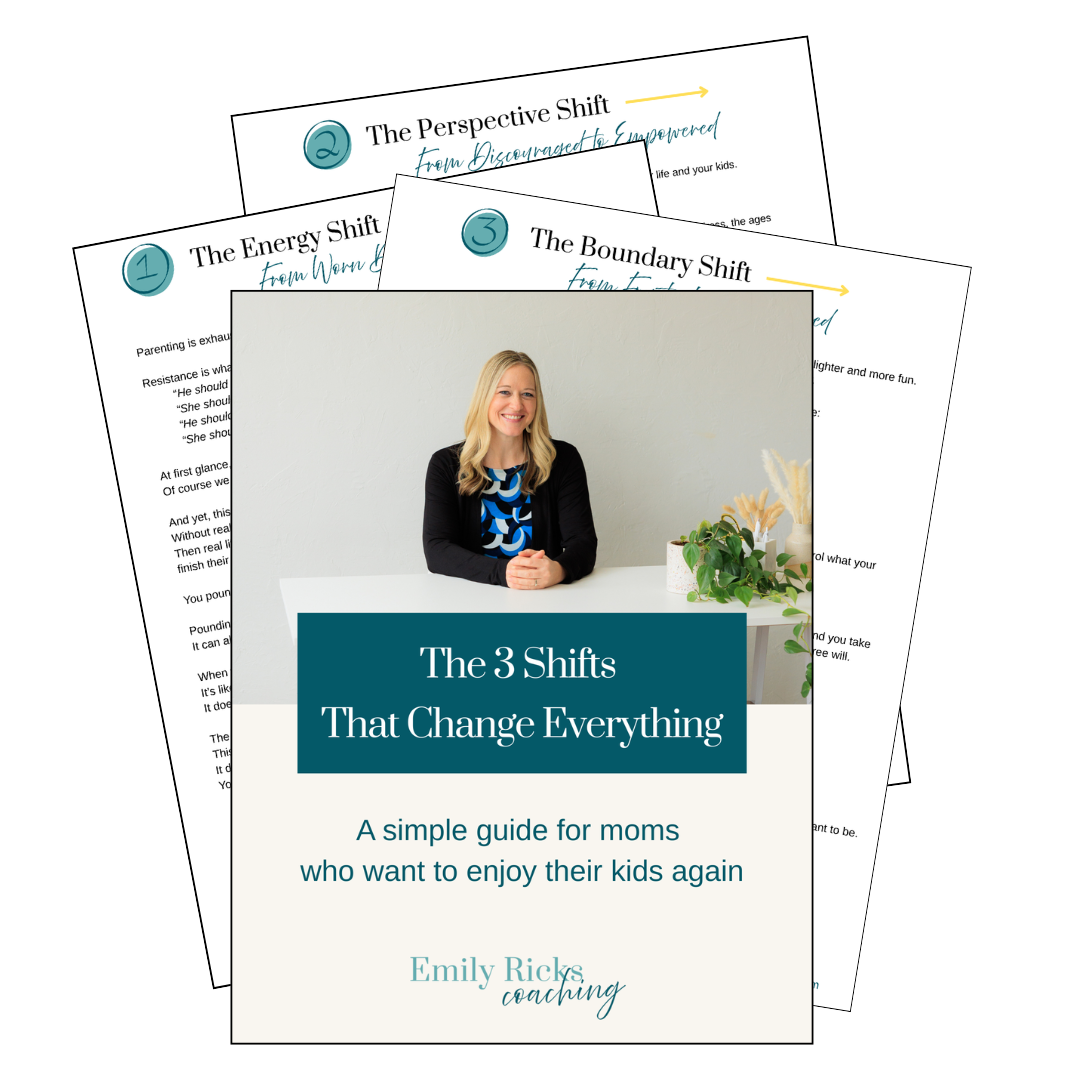
Download My Free Guide
The 3 Shifts
That Change Everything
Whether your kids are little, grown, or somewhere in between, this guide will help you move through discouragement and back to joy in your parenting
Full Transcript:
Ep 79-When Parenting Feels Heavy
You're listening to the Think New Thoughts Podcast with Emily Ricks, episode number 79, When Parenting Feels Heavy. I'm Emily Ricks and this is Think New Thoughts, a life coaching podcast to help you find more joy in your relationships. In each episode, I'll share a simple idea that will help you see things in a new way, so you can love God, your neighbor, and yourself more deeply than you ever have before.If you're ready to literally change your mind, I think you'll like it here.
Hello, how's it going? So we're going to talk specifically about parenting today. Raising kids of any age is a job that requires tremendous resources, physically, spiritually, emotionally, financially.
It's a very demanding job and it's normal and understandable for parents to have days or even seasons when they're really tired. And there are layers of tiredness, right? Sometimes, like when you have a newborn or your kids have been throwing up in the night, or you have teenagers who need a late night conversation to sort out a problem they're having, you're downright sleep deprived. So you feel tired.
Or maybe you've hosted a birthday party and it was crazy and loud and you're ready for a quiet house. So you feel a certain type of tiredness. There will be days in parenting where you feel spent, where you feel like you have nothing left to give.
And I think there can be beauty in giving all you've got to a job that's so important. That said, I want to talk about something a lot of people do usually without realizing it, that makes parenting more draining than it needs to be. Whether you have babies, adult children, or any age in between, there are certain types of tiredness that just come with the territory of being a parent.
But there's a particular flavor of exhaustion that's optional, that we bring upon ourselves by the way that we choose to think. I'll use a general term for this way of thinking and call it resistance. Resistance is when we think our kids should be different than they are.
It sounds like this. He should be more responsible. She should care more about church things. He shouldn't be so lazy. She shouldn't throw a fit. He should be more respectful.
She should want to spend more time with the family. He should choose better friends. He should get better grades.
She shouldn't be such a picky eater. He should be more helpful. And this feels very logical and it feels very useful.
And you have probably built up a really convincing case to prove why your son is lazy and how
that's not good for his life. Or a really convincing case to prove why your daughter shouldn't be throwing fits and why that's going to not be good for her in the longterm. And you can hang on to these thoughts if you want to.
You can keep thinking in this way about your kids. These judgments, these criticisms, they come so naturally. And the shoulds.
These manuals of how you think they should be and what they should and shouldn't do. You wrote these shoulds in your mind based on what you believe and what you honestly think will help them to be happy in their lives. So you repeat these manuals in your head over and over.
She shouldn't be like that. She should do this instead. You complain them to your spouse or to your mom or to your friend.
He shouldn't make that decision. He should value what I value. You argue these manuals with your kids out loud with words, or just by the way you sigh or throw up your hands or punish them.
When you're operating for resistance as a parent, you write a very thick, very detailed manual for how you think your kids are supposed to be. And then in real life, they don't live up to it. They don't keep their room clean.
They don't appreciate all the sacrifices you make for them. They don't value the things you value. They don't make decisions that you see as responsible.
And then you resist, you pound your fist on that manual, but you are supposed to do it like this. I wrote on page 724 in my manual for how your life is supposed to go, that you need to be like this. So get with the program, do it right.
And pounding your fist on the manual can be something you do externally, like yelling or lecturing or punishing. It could also be something that you do internally, like resenting, like worrying. And this is where so many moms, especially of teenagers, start to lose their minds.
All these manuals, all these expectations that don't pan out, that don't come true. And it can feel like your kids are throwing everything in your face, all the sacrifices, all the effort, all the money and time and love that you've given them. And you didn't realize you were expecting a transaction.
You didn't really understand that you had strings attached, but you planned in your mind that in return, they would live the way you wanted them to. They would care about the things you care about, that they would be responsible and helpful and punctual and conscientious in the ways that you wanted them to. And when they don't, it's easy to feel discouraged and hurt, maybe even disillusioned.
You might feel like a failure that you were supposed to raise kids who checked all these certain
boxes. And through some fault of yours, they didn't measure up. And so you don't either.
If you find yourself in this very painful, dark, hopeless place, I want you to know that there is a way out. There is relief available to you. There is a light that you can turn on immediately.
When you are pounding your fist on a manual, when you are resisting who your kids are and what they do and say, because it's different than what you wanted or expected or imagined, this is resistance. And it feels tight and angry and frustrated in your body. It feels critical.
It's based in judgment and fear and worry. And it's called arguing with reality. Life is one way, but you want it to be different.
It's like it's raining outside and you keep screaming at the sky that it's supposed to be sunny today. That's how you pictured it. That's what you planned on.
That's what you wanted. So maybe if you keep screaming, the rain will stop pelting you in the face. Byron Katie says, when I argue with reality, I lose, but only 100% of the time.
When your manuals for your kids are an argument with reality, no matter how virtuous they sound, they should tell the truth. They should be kind. They should pick up their socks.
When these manuals are an argument with reality, you waste incalculable amounts of energy pounding your fist on your manuals, insisting that your kids should be different than they actually are. And it's exhausting and it makes you feel powerless and hopeless. This resistance, this way of thinking, this arguing with reality makes you want to yell and scream and cry and punish.
It makes you want to blame your kids for ruining your image of the life you were supposed to have or blame yourself for not doing a better job as a parent. If only I had done this better, if only I had done that better, then it would have turned out the way it was supposed to. When you get caught in the hopelessness of this mindset of resistance, here's the light you can turn on.
You can shift from resistance into acceptance. It's a decision you can make when you're drowning in manuals and the hopelessness of trying to get reality to be different than it is. Resistance is, it shouldn't be like this.
This wasn't supposed to happen. I was supposed to be able to prevent this. She wasn't supposed to make this decision.
He wasn't supposed to lose this opportunity. Resistance is arguing with reality. It's a mindset.
It's a way of thinking about your kids. And it creates feelings of hopelessness and discouragement. And it feels like yelling at the sky to stop raining.
It feels like trying to push a 10,000 pound boulder up a hill. You use up all your energy insisting
it shouldn't be this way. And yet you still can't get it to change.
Instead of screaming louder or pushing harder, you can shift from resistance into acceptance. You can stop the argument with reality. You can choose to stop believing that things should be different than they are in this moment.
So whether you have a baby that's not sleeping well, a toddler who's throwing a tantrum, an elementary schooler who doesn't want to do their homework, a teenager who's digging their heels in on a rule that you have, acceptance doesn't mean that you like that or that it's what you wanted, but acceptance sounds like this is reality. This is who my child is today. This is who I am today.
This is my path. This is my curriculum to become a new version of myself. I'm willing to be in this.
I'm willing to get rained on, even though it's not what I planned. It's not what I expected. I can accept that this is what is.
Brooke Castillo says accepting things you can't change is one of the most powerful things you can do. It doesn't mean nothing will change. It just means something that's already happened, things that are happening in this moment.
You can't make them in this moment different than what they are. And that's actually one of the most powerful things you can do. And the moment you choose acceptance, you will feel the shift where resistance feels tight and angry and draining and dark.
Acceptance feels soft. It feels open, like you can breathe, like maybe you can even see a light in the distance. When parenting feels especially heavy or hard, there are three shifts that can change everything.
This is the first one, the shift from resistance to acceptance. It's an energy shift. It's a decision to change how you are expending effort.
Instead of pounding your fist on your manuals, you stop arguing with reality and embrace what is. This frees up an astounding amount of energy. Many people experience it as a feeling of relief.
His resistance is cousins with judgment and criticism and anger and frustration. Judgment of your kids, criticism of yourself, anger that life isn't the way you wanted it to be. Frustration that parenting is so draining.
And all of these emotions create more of each other. And it can really wear you down. Acceptance feels totally different inside of your body.
Acceptance is cousins with compassion, faith, hope, and gratitude. Compassion for your kids as they make mistakes, as they find their way in a sometimes very confusing world. Faith that God
will use this mess for good, for you, for your family, for others, even though you can't see right now how that could possibly be.
Hope that even though it feels dark right now, the light will come. You'll be guided to new ways of thinking and being, and you won't always feel like this. And gratitude for the heart- wrenching soul-refining elements of motherhood that shape you and ultimately deepen your capacity for joy.
When you choose acceptance, you open the door to all of that. It can happen in an instant. You can feel relief immediately when you stop arguing with reality and embrace what is.
When you say, this is my curriculum, I accept this AP parenting course. I am willing to be in this. It doesn't take away your challenges.
It doesn't make things easy. But from there, from acceptance, once you light that candle, you can begin to see your way forward. Hey, if you enjoyed this episode and you've been feeling a little worn down as a parent, I created something for you.
It's called the three shifts that change everything. A simple guide to help you move from exhaustion and discouragement into parenting with more faith, intention, and joy. Whether your kids are little, grown, or somewhere in between, this PDF will take you from worn down to wise, from helpless to hopeful, and from frustrated to anchored.
I'd love to share it with you. You can download it for free at EmilyRicksCoaching.com. And there's also a link in the show notes. Thanks so much for joining me today.
I'll talk to you next week.
