
Episode 82: A New Way to Think This Easter: Walking in Newness of Life
This week, I’m sharing a special Easter episode about what it really looks like to walk in newness of life. If you’ve been carrying a heavy story—something painful, unfair, or hard to let go of—I want to offer you a different way to think about it. In this episode, I’ll walk you through how to release what’s been weighing you down, shift the story you’ve been telling, and step into more light, freedom, and peace this Holy Week.
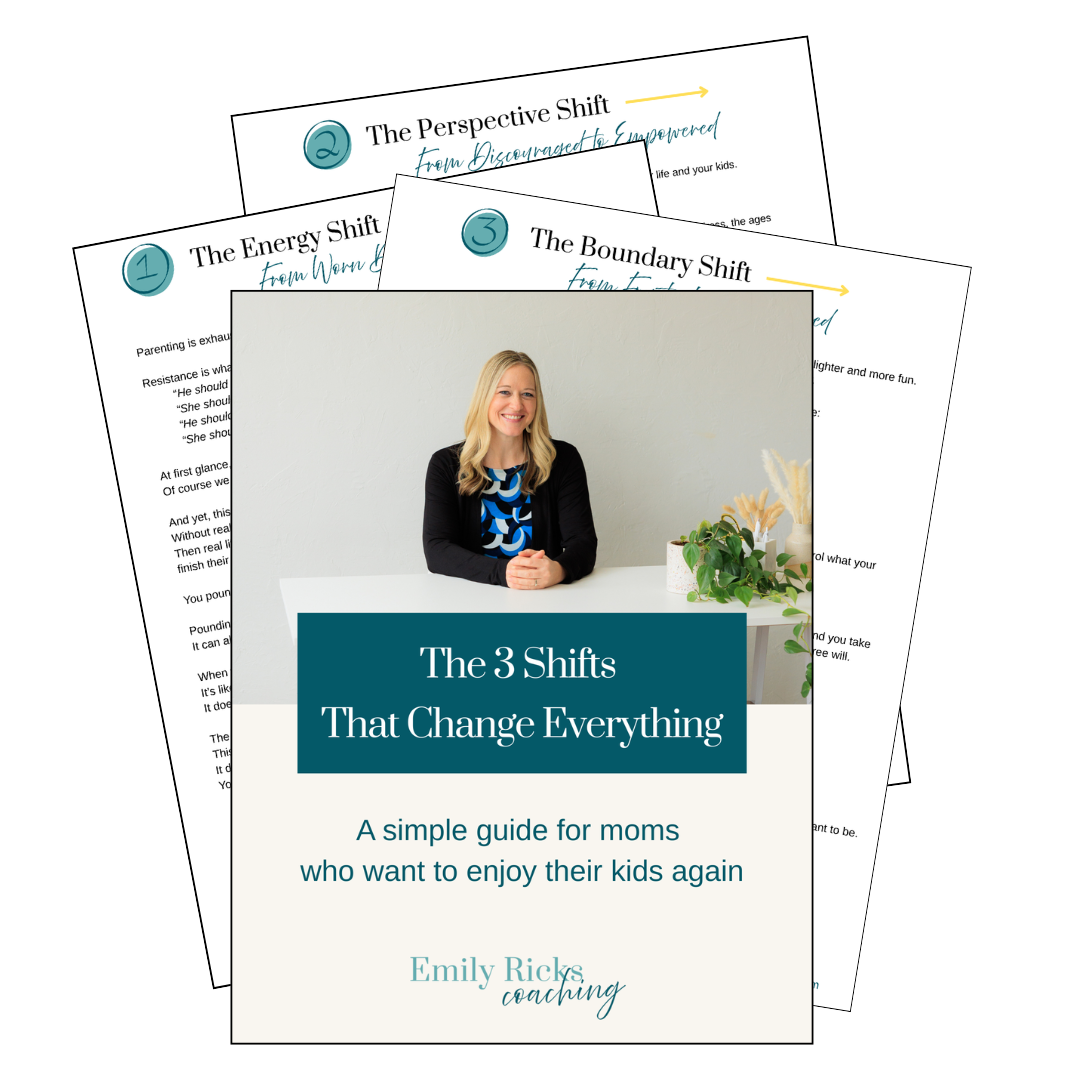
Download My Free Guide
The 3 Shifts
That Change Everything
Whether your kids are little, grown, or somewhere in between, this guide will help you move through discouragement and back to joy in your parenting
Full Transcript:
Ep 82-A New Way to Think This Easter: Walking in Newness of Life
You're listening to the Think New Thoughts Podcast with Emily Ricks, episode number 82, A New Way To Think This Easter: Walking in Newness of Life
I'm Emily Ricks and this is Think New Thoughts, a life coaching podcast to help you find more joy in your relationships. In each episode, I'll share a simple idea that will help you see things in a new way so you can love God, your neighbor, and yourself more deeply than you ever have before. If you're ready to literally change your mind, I think you'll like it here.
Hello, happy spring. How are you? I'm so excited to be with you today. I decided I wanted to do a special episode this week, specifically focused on Easter.
And normally my episodes air on Thursdays, but I decided to release this one on Palm Sunday to give you a little extra time to think about some of these ideas as you prepare to celebrate Easter. So as your mind turns this week to light and life and rebirth, I wanted to share some new thoughts that you can think. So let's start by just talking about some of the metaphors of this season.
As I'm looking out my window, I see a lot of things turning from winter to spring. The grass has been very brown and it's just starting to turn a little bit green. The trees have had no leaves and some of them are starting to bud.
There are perennials that have been under the ground that are starting to just poke up. So that's one metaphor, winter to spring. Also at this time of year, I love to think about death to resurrection and all the ways that we see that in nature.
And I love Romans chapter six, verse four, where Paul says, therefore we are buried with him by baptism into death that like as Christ was raised up from the dead by the glory of the father, even so we also should walk in newness of life. I love that phrase, newness of life. And I feel that in the springtime, as we watch the grass and the trees and the flowers and the other things begin to bloom, that they are a witness to us of the newness of life, even when they were dormant or dead all winter long.
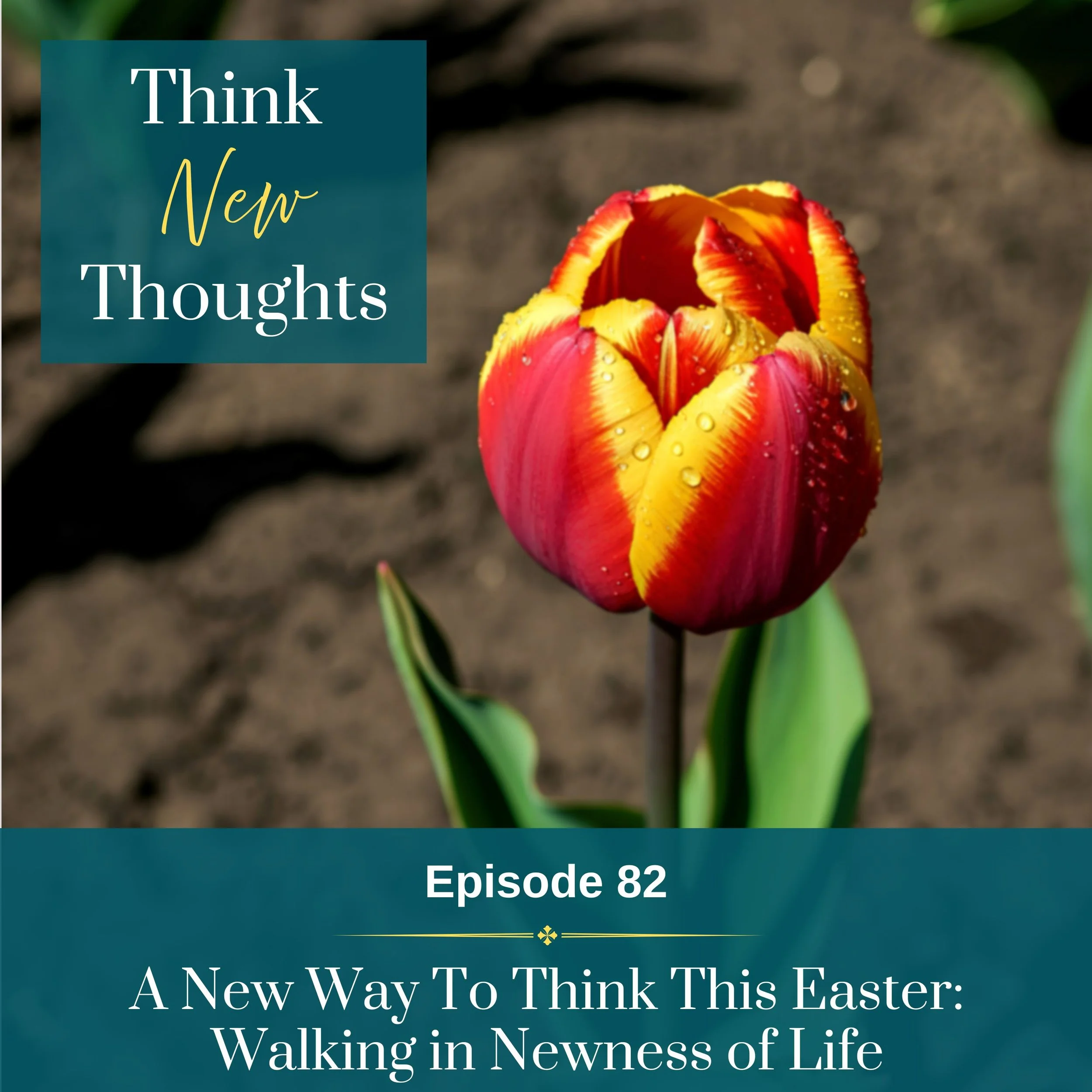
And one of my favorite examples of this in nature is tulips. I love to think of a tulip bulb, which, you know, usually you plant those in the fall. And then for several months, they remain dormant underground in the dark, in the cold, not exhibiting any kind of growth that we can actually see.
And then in the spring, when the time is right, a tulip reaches up to the light, breaks through that cold, hard ground and begins to come up and then eventually bloom. I love seeing that. And I love thinking about not just the of a tulip bloom, but also the whole story of it being in the
dark, cold ground for many, many months before it was ready to bloom.
So today I want to invite you to think about something that feels heavy and dark for you. Maybe it's a strained relationship with someone that you used to be close to. Maybe your kids are making choices that are weighing heavy on your heart.
Maybe you've been feeling angry or fearful about things that are going on in the world, things that you're seeing on the news. Maybe you have felt that darkness pressing down on you. Maybe you're holding on to a past hurt, holding on to something that someone said or did a way that they mistreated you years ago, or even decades ago.
And now think of yourself as a tulip bulb. You've been sitting in this darkness for a while now, but you can push through that cold, hard ground and maybe it's time to bloom. You can reach up to the light and grow from this.
And that's one way you can celebrate Easter this year and accept the gift that Christ gave to walk in newness of life. I want to share a few ideas with you today that will help you to do that. So let's talk about what a grievance story is.
Dr. Fred Luskin has a really amazing book. It's called Forgive for Good. And in there, he teaches about grievance stories.
Basically a grievance story is when we complain about something we didn't get, and it can be something trivial all the way to something very traumatic. And your grievance story is your interpretation of a past event. And you experience emotions in the present today, right now, as you replay something that happened in the past, as you think about it.
So when you have a grievance story, you're blaming somebody else or something else for how you feel in the present. And this complaining, these grievance stories take up space in your mind. So here are some examples of a grievance story.
Kids come up with grievance stories all the time, right? Like, I wanted the blue cup, or I wanted to stay at the playground, things like that. Or adults, that project took me five hours longer than it was supposed to. Or I can't believe my flight got delayed.
Or more serious things like my parents should have treated me better when I was a kid. My dad shouldn't have died so young. My kids were supposed to make better choices.
My life wasn't supposed to be this hard. So all of these are grievance stories where there's something that happened that we didn't want to happen. And now we're stuck complaining about it, replaying the injustice over and over and over.
So this week, this Easter, this spring, I want to invite you to walk in newness of life, to step out of a dark place that you've been in and into the light. So the first step, if you want to do that, is to identify your grievance story. What is something that happened that you didn't want to
happen that you've been dwelling on, focusing on, or complaining about? It could be something really small.
That's just been bugging you. Or it could be something really, really big that has been pressing down on you for years. Here's my invitation to you this holy week.
I want to invite you to choose a grievance story and choose to let it go. You've been feeling weighed down by the load, like a tulip bulb pressed down in the dark, in the cold, in the dirt. And this week, today, you can change your focus.
You can change your story. You can decide to reach up to the light and that it's time to rise up, to break through the dirt and to grow from this experience. So there's three elements of choosing to walk in newness of life this Easter.
And as you think this week about Jesus's death and his resurrection and what that means to you and what it means for you, I want to share these three elements of how you can choose to walk in newness of life. So the first one is identify your grievance story. Kind of started doing that.
What is the dark place that you've been in? What is the thing that happened that you're holding onto? And then to identify your story, you need to do two things. You need to write down the facts and then also write down what you're making it mean. So a grievance story can be something really trivial.
Here's an example I like to use. Let's say my daughter borrowed my shampoo and left it in her shower and didn't bring it back. That's the facts of what happened.
Maybe my story is she's so irresponsible. She doesn't respect me. She doesn't care that now I have to go into her bathroom while I'm all wet to get my shampoo.
My kids don't appreciate anything I do for them. That would be if I have a grievance story about this thing that happened. And that's a trivial example.
If we go to something more traumatic, maybe the facts are that your ex-husband had an affair four years ago. And maybe your story about what happened is he is the most terrible person that ever lived. He ruined my life.
I'm miserable now. And it's all his fault. I'll never be able to find love again.
And my kids are going to turn out rotten because they have a terrible dad. So the first step to walking in newness of life is you identify your grievance story and you begin to understand the difference between the facts of what happened and the way that you're interpreting it. Then here's the next step.
You give up all hope, but let me qualify that. You give up all hope of having a better past. You give up all hope that the past is going to have been different than it was because that's
something you can never change.
Like imagine that tulip bulb. What if you heard a tulip who was sitting in the dark from October, November, December, January, February to March. And what if you heard that tulip saying, I wasn't supposed to be in this dark, cold place.
This never should have happened. Somebody put me here in the dirt. It's so unfair.
I was never meant to be here. And what would you say to that tulip? You'd be like, Oh no, no, no, no. You definitely need to be here.
And now it's spring and it's time to bloom. So when you give up all hope of a better past, you accept the reality that as humans, we definitely will experience injury and disease and betrayal and pain. And that that's part of the deal.
Everyone on the planet has God given agency to make their own choices and people will do things we don't want them to do. And we will often not get some of the things that we want. This is reality and God designed it to be this way.
So that's what I mean by giving up all hope. You give up hope of having a better past because in order to forgive, in order to walk in newness of life this Easter, in order to go from darkness into the light, you actually need to give up hope that the past is going to ever be better than it was give up hope of a different life than the one you have right now. And from there, you can move forward and you can start seeing more and more and more light.
So you identify your grievance story. You give up all hope of a better past, and then you can begin to write a new story. Here's a perspective that I think is really cool.
When you think about writing a new story, when you eat food, what happens? You put food into your mouth and then your body metabolizes it. The nutrients from what you eat get absorbed. And then all the rest exits your body as waste.
It's actually kind of a miraculous process, right? So I want to encourage you to think about your life experiences like food and choose to metabolize the experience like something you ate. I want you to comb through the experience and pull out, okay, what are the nutrients of what I went through? How can I extract wisdom and experience? Maybe I learned patience or humility. Maybe this experience brought me closer to God.
So absorb that, keep it, hold onto it. But then also you can identify, okay, what is waste? Anger, resentment, feeling like a victim, blaming others for how I feel. Okay.
I don't want to absorb that. I don't want to keep that inside of me. I want to let that go.
And you can let your emotional digestive system remove that from your body. You're going to metabolize this experience. You're going to keep, you're going to absorb, you're going to hold onto the things that nourish you and you're going to let the rest go.
And then what happens as you do that is like that tulip bulb, you're going to be able to put your roots down in that dark space and use it to ground you. And then you can reach up to the light. You can choose to start thinking new thoughts about this experience, about this thing that originally was dark and heavy and cold.
But now you're going to be able to grow from it. So when you're ready to write a new story, there are literally thousands of new thoughts that you can choose. Here are just a couple to get you started in this direction.
I'm ready to feel love instead of hate. I'm ready for light instead of darkness. I'm willing to see this in a new way.
This experience gave me roots. Now it's time to bloom. God will use this for good.
If you want to walk in newness of life, you can choose to think, when I change my focus, my feelings will change. I'm ready for freedom. I'm ready for a fresh start.
I can choose to give myself a new beginning. If you're ready to write a new story, you can choose to think God can heal me. I want to invite you to bloom this spring, to walk in newness of life, to identify a painful, heavy story that has been pressing down on you, that has been keeping you in the cold and the dark, and to choose to lose all hope of having a better past, and instead to fully accept the pain that you have been through as a necessary part of your journey.
And then, just like Christ was raised from the dead, you also can rise from the darkness and dirt, and you can walk in newness of life. I want to close this episode with a song today. It's one I wrote on Easter a few years ago.
My hope is that as you listen, God will speak to your heart, and that this spring, this Holy Week, this Easter, or whenever you're ready, you can let the light in and allow God to heal you of whatever has broken your heart. This song is called Heal Me. I hope you enjoy it, and I'm wishing you a beautiful Holy Week and Easter celebration this year.
Lyrics to Song, Heal Me
Words and Music by Emily Ricks, copyright 2021
It’s been dark too long
Just trying to be strong
But these walls I will see no more I’m opening the door
Lord Heal Me
Let the light in, help me see Heal Me
Take my fear and set me free Lord Heal Me.
You can take you time
As we write each line
And I’ll...I’ll just take one step And trust you with the rest
Lord Heal Me
Let the light in, help me see Heal Me
Take my fear and set me free Lord Heal Me.
This burning deep inside... From these ashes I will rise
Heal Me
Let the light in, help me see Heal Me
Take my fear and set me free Lord Heal Me.
Shownotes:
Feeling a little worn down as a parent?
Grab my free guide, The 3 Shifts That Change Everything.
A simple guide for moms who want to enjoy their kids again.
You’ll discover:
• The Energy Shift that moves you from worn down to wise
• The Perspective Shift that carries you from discouraged to empowered
• The Boundary Shift that takes you from frustrated to anchored
Ready for deeper support?
I offer 1:1 coaching for moms who are ready to experience these shifts in a deeper, more personal way. I’d love to help you renew your mind so you can enjoy your kids again.
